
They were here long before the tourists. They’ll be here long after closing time.
Spring comes to Estes Park the way it comes everywhere in the Rockies: sideways, arguing with itself, and dropping six inches of snow on the tulips just to see what happens. But beneath all that atmospheric drama, something extremely dedicated is already at work: our Estes Park pollinators!
Pollinators don’t care about the forecast. They have flowers to visit, nectar to drink, and pollen to haul across the landscape. They were doing this before roads existed. Some of them were doing this before flowers existed (which is impressive). If you’re tromping around in the Rockies or meandering the streets of downtown Estes Park, you’ll appreciate a little local knowledge about our buzzy little friends! So here’s your field guide to the ones you’re most likely to spot this spring — no binoculars required!
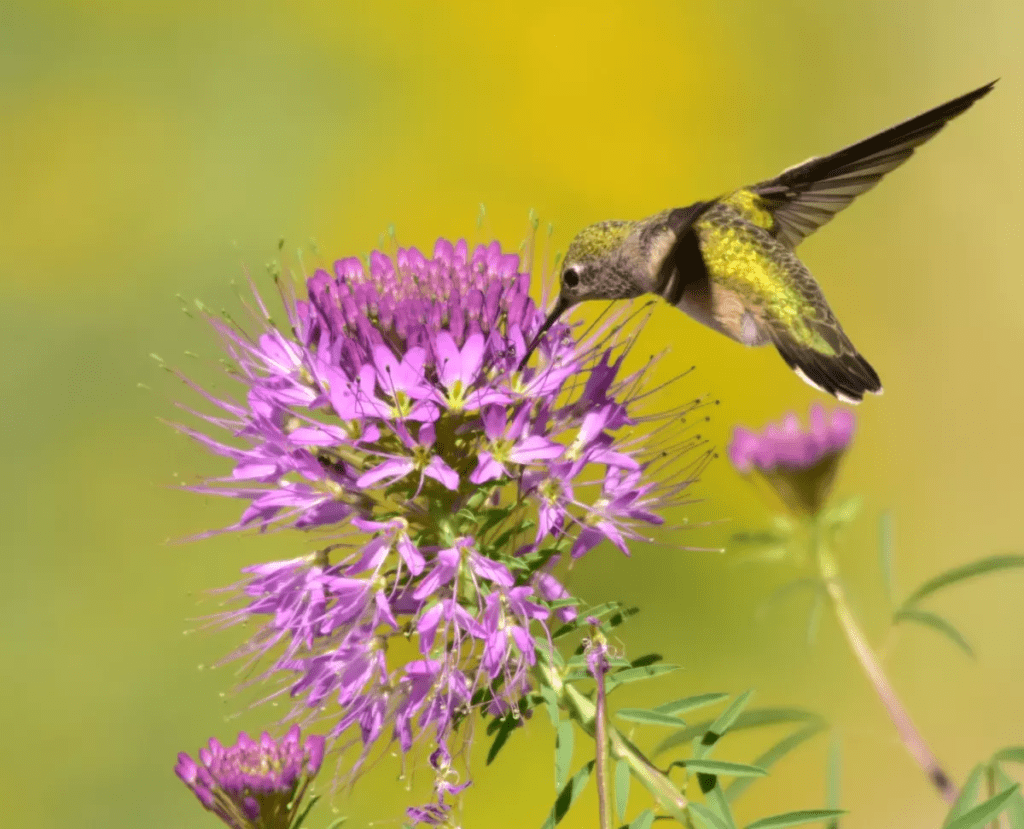
1. The Broad-tailed Hummingbird (Selasphorus platycercus)
Status: Colorado’s signature spring arrival. The one everyone wants to see.
You’ll hear the males before you see them. The broad-tailed hummingbird produces a loud, metallic trill with its wings as it flies — a sound like a tiny circular saw that somehow became beautiful. The male’s rose-red throat patch (called a gorget) flashes iridescent in sunlight. The female, sensibly, is more subtle.
Broad-tails typically arrive in Colorado in mid-to-late April, making them one of the first hummingbirds back in the mountains. Their preferred flowers are red and tubular — think penstemon, columbine, Indian paintbrush — which is why those blooms and these birds seem to show up together like they planned it, because they essentially did. They evolved alongside each other.
Fun fact: A hummingbird’s tongue can lap nectar 13 to 17 times per second. That’s a level of commitment to a single task that most of us can only aspire to.
Field note: If you have a feeder up by late April, you may find a broad-tail has already claimed it as personal property and is aggressively informing other birds of this fact.
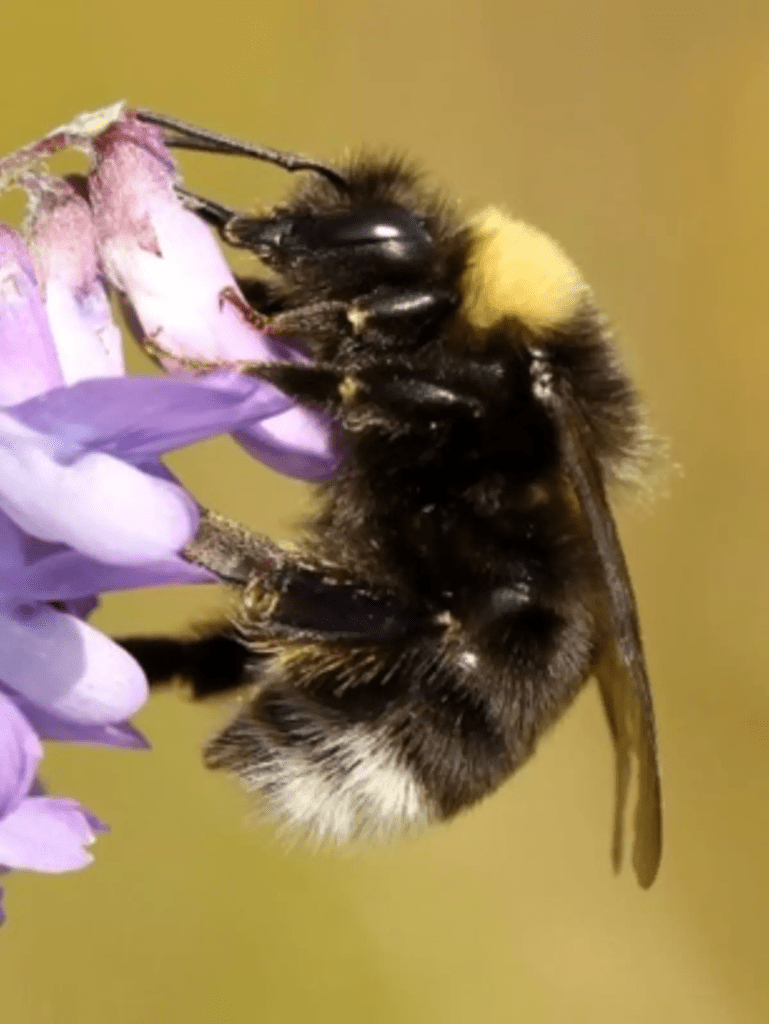
2. The Bumblebee Queen (Bombus spp.)
Status: Underslept, hungry, and running an entire future colony on sheer willpower.
In early spring, the only bumblebees you’ll see are queens. That’s because every other bumblebee in a colony dies each fall — including the old queen — and a single mated female is the sole survivor, spending the winter buried in leaf litter or loose soil. In spring, she emerges alone, eats everything she can find, and begins building a new colony from scratch. In an abandoned rodent burrow. By herself.
Colorado is home to nearly a thousand native bee species, and bumblebees are among the most visible. They’re the large, fuzzy, lumbering ones — shaped like a flying grape — who show up earlier in the season than most other bees because they can regulate their own body temperature by shivering their flight muscles. Science calls this thermoregulation. The rest of us call it totally impressive.
Bumblebees also have a secret weapon: buzz pollination, or sonication. They grab a flower and vibrate at just the right frequency to shake loose pollen that other pollinators can’t access. Tomatoes and blueberries depend on this technique. So, technically, bumblebees are responsible for salsa.
Fun fact: Colorado’s Western bumble bee (Bombus occidentalis), once common across the Rockies, is now rare enough to be a species of concern. If you spot one — it has a yellow-and-black thorax and a distinctive white rear — that’s a genuine sighting worth noting!
Field note: The queen bumble is easy to spot in spring because she’s enormous compared to the workers she’ll eventually raise, and she’s flying very purposefully, with the energy of someone who has a lot to do and no help yet.
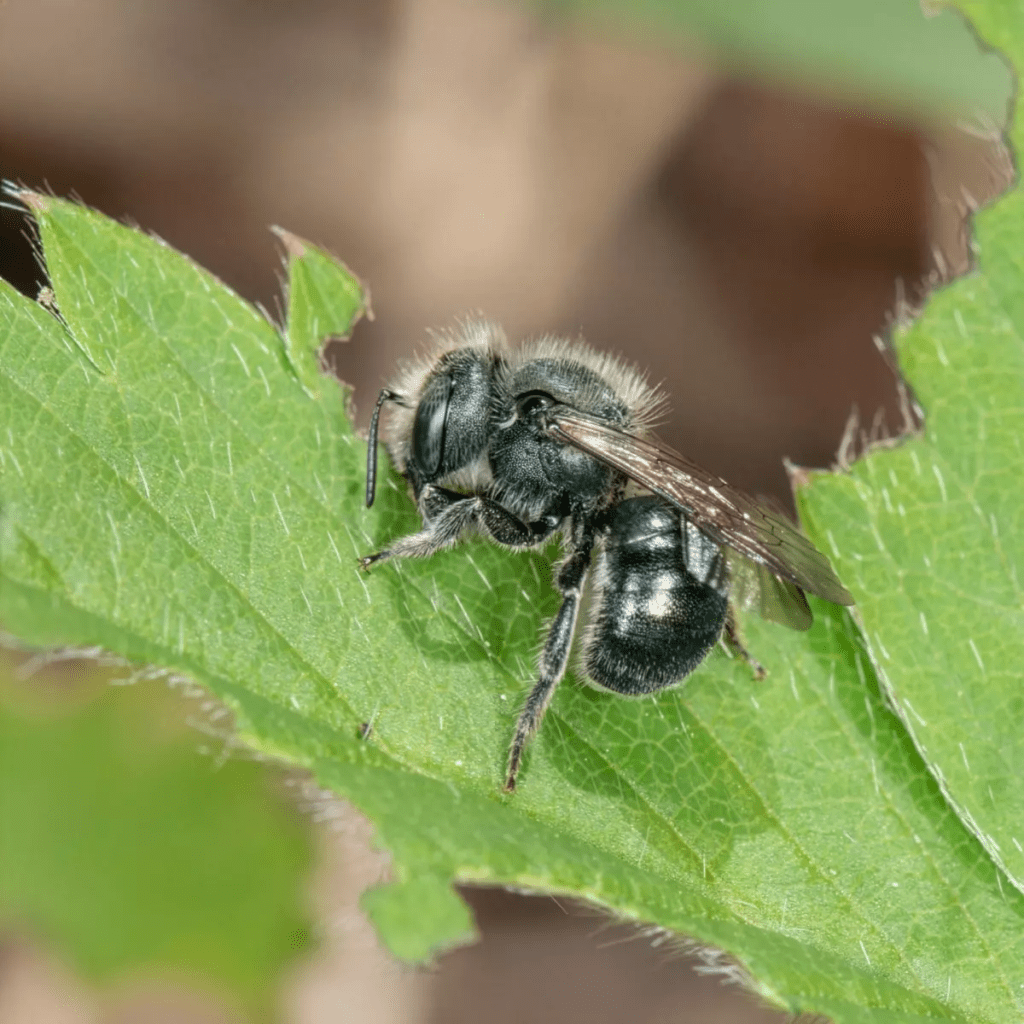
3. The Mason Bee (Osmia spp.)
Status: Solitary, efficient, does not have time for drama.
Mason bees are among the first bee species out in spring, and they are spectacularly good at their jobs. A single female mason bee can pollinate the equivalent of what it takes 100 honeybees to accomplish. This is partly because she carries pollen dry on the underside of her hairy abdomen rather than packed into little leg pouches, which means pollen falls off constantly as she moves between flowers — messy, yes, but extraordinarily effective.
She’s also a solo operator. No queen, no workers, no hive. She finds a narrow tube or cavity — a hollow stem, a hole in weathered wood, a crack in masonry — seals individual chambers inside with mud, lays a single egg in each, provisions it with pollen and nectar, and moves on. The larvae hatch, overwinter as cocoons, and emerge next spring to start the whole thing over.
Colorado has its own native species, including Osmia coloradensis, and the genus as a whole is particularly abundant in the western United States.
Fun fact: Mason bees are named for their mud-sealing behavior, after the mason’s craft. They are not named for anything spooky, despite how that sounds.
Field note: You probably won’t notice mason bees unless you’re looking. They’re small, fast, and don’t buzz loudly. Watch for small metallic-green or bluish bees on spring-blooming flowers like currants, willows, or fruit trees.
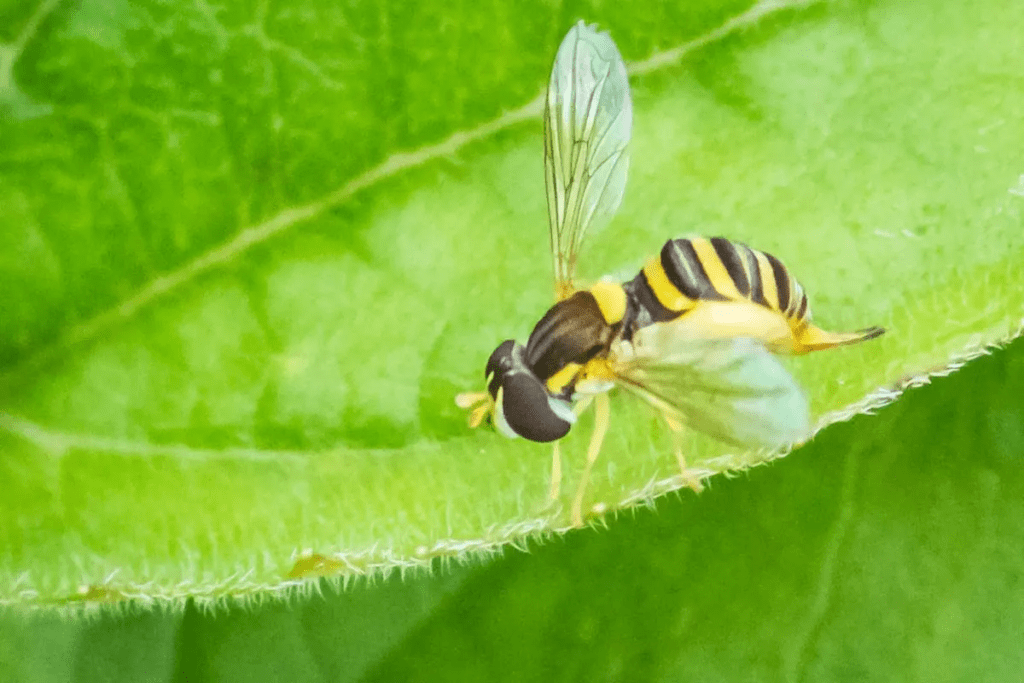
4. The Hover Fly (Family: Syrphidae)
Status: A bee impersonator who is not ashamed of it and, frankly, it’s working great.
Hover flies — also called flower flies or syrphid flies — are not bees. They are flies. True flies, with two wings instead of four, short antennae, and no stinger whatsoever. But many species have evolved yellow-and-black striping that mimics bees and wasps so convincingly that even experienced gardeners are fooled. Birds, their main predators, are also fooled. This is called Batesian mimicry, and it is one of evolution’s great acts of deception.
Adults feed on nectar and pollen and are considered the second most important group of pollinators after wild bees. Their larvae, however, are carnivores — each one can eat up to 400 aphids during development, making hover flies a two-for-one deal: free pollination plus free pest control.
They hover with remarkable precision, almost stationary in midair, wings essentially invisible. They also have small gyroscope-like structures called halteres that help them balance during these maneuvers. It’s a lot of engineering for something roughly the size of a paperclip.
Fun fact: Many hover fly species have extendable, sponge-like mouthparts designed to mop up nectar and pollen. Delightful. Strange. Effective.
Field note: If you see something that looks like a tiny bee hovering perfectly still over a flower, then darting sideways for no reason, then hovering again — that’s almost certainly a hover fly. A bee would have moved on by now.
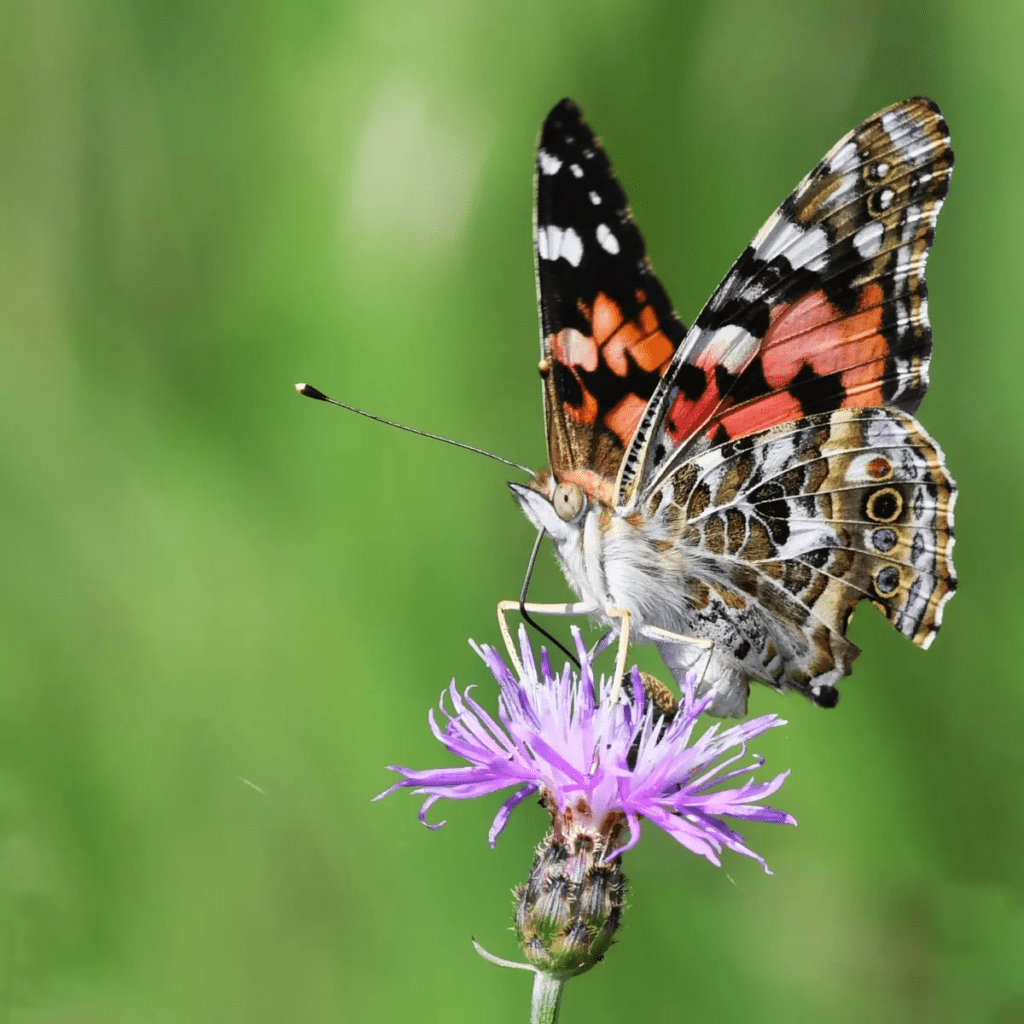
5. The Painted Lady Butterfly (Vanessa cardui)
Status: The most well-traveled pollinator you’ll ever meet at 7,600 feet.
The painted lady is the most widespread butterfly on Earth, found on every continent except Antarctica and South America. What’s remarkable is how they get around: they migrate, in multigenerational relays, across thousands of miles. Some researchers have traced their annual route through North America to a round-trip of roughly 9,000 miles — longer than the monarch’s famous journey.
In spring, painted ladies move northward through Colorado as the season opens up the high country. They’re a warm-toned orange with black-and-white spotted wingtips, and they’re generalists — they’ll visit a wide variety of flowers and host plants, which is a large part of why they’ve colonized virtually the entire planet.
Colorado hosts around 250 butterfly species in all, ranging from the meadows of Rocky Mountain National Park to the canyon country in the south, but the painted lady may be the one most likely to show up wherever the wildflowers do.
Fun fact: Butterfly taste receptors are located on their feet. They can literally taste a plant by landing on it, which is how they choose where to lay eggs.
Field note: Look for painted ladies on open, sunny slopes in late spring. They tend to be restless — they land, taste, and move on quickly — but they’re not shy. They’ll come right up to you.
Why This All Matters (the non-preachy version)
Colorado is home to nearly 950 native bee species alone — more than most states, thanks to the sheer diversity of its ecosystems from plains to alpine tundra. That diversity is not an accident. It took a very long time to build, and it works because each pollinator fills a slightly different role: different flower shapes, different flight temperatures, different seasons.
When you’re walking the trails around Estes Park this spring and you see something small and purposeful moving between flowers, it’s probably been doing some version of that since before the mountains were this tall. That’s worth a second look!